🇫🇷 This article is also available in French.
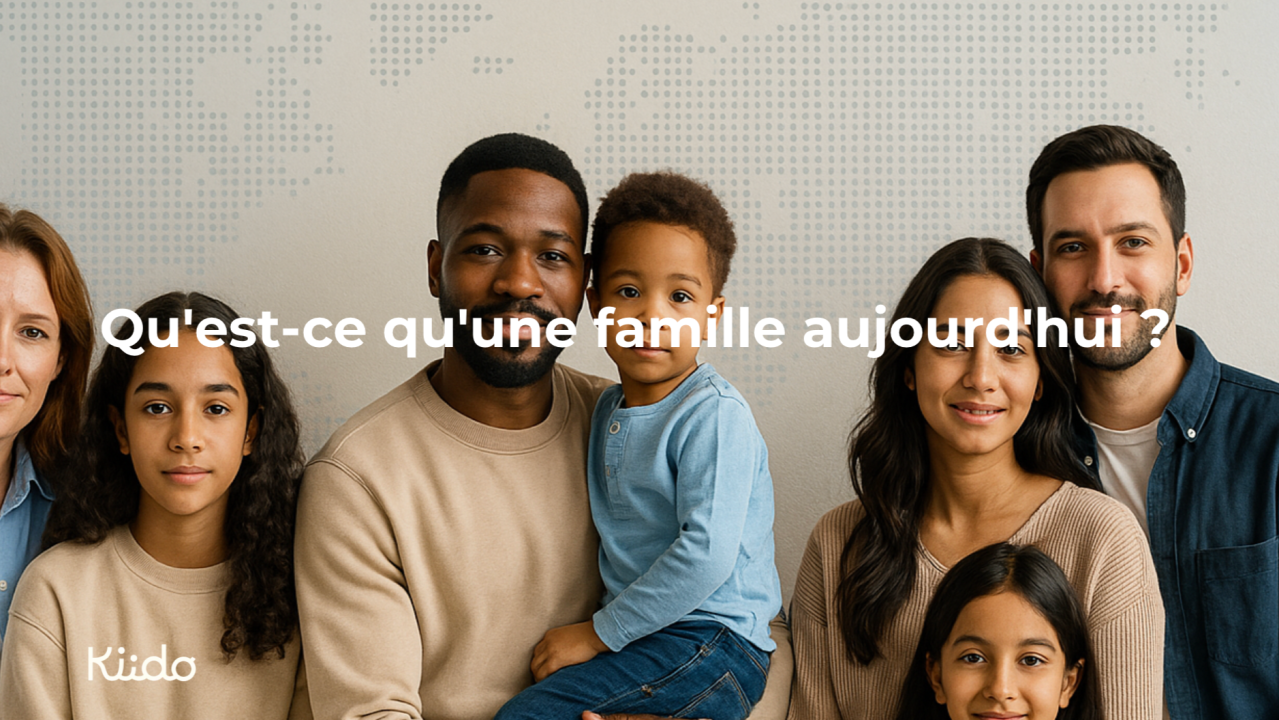
For a long time, the answer seemed obvious: a family meant two married parents living under the same roof with their children. That model still exists, but it no longer reflects the reality of many families in France. Today, children grow up in married families, families joined by a civil partnership (PACS), unmarried couples, single-parent households, blended families, or shared-custody arrangements. The family hasn't disappeared. It has simply taken on new forms.
That's why divorce statistics only tell part of the story.
In France, a great many couples never marry. They live together, build a family, separate, rebuild their lives, and reorganize their daily routines without ever appearing in divorce statistics. According to research from INED, around 420,000 couples separate each year in France, but only about 129,000 of those separations correspond to a divorce. The majority of breakups involve couples in unmarried cohabitation (around 260,000) or bound by a PACS (around 32,000). Limiting the picture to divorce figures alone gives an incomplete view of how French families are evolving.
This shift also shows up in how children are born and raised.
Until 2022, France had the highest proportion of births outside marriage in the European Union. That doesn't mean children are growing up in less stable families. It mainly shows that marriage is no longer the only framework for family life. Many parents build lasting relationships, raise their children together, and commit fully to one another without being married.
At the same time, separation has become a common part of family life. Recent INSEE studies show that around 3% of married, PACS, or cohabiting couples separate each year. In Provence-Alpes-Côte d'Azur, 68% of separations involve unmarried couples, 25% are divorces, and 7% are PACS dissolutions. In Île-de-France, the results are similar: separations occur across every type of union, not just marriage.
But separation never puts an end to parenthood.
Children still need stability, reference points, emotional security, clear organization, and two parents capable of communicating despite their differences. In 2023, INSEE reported that 67% of minors lived in a so-called "traditional" family, 23% in a single-parent family, and 10% in a blended family. In total, nearly three children out of ten live with only one of their parents.
That is why child custody and co-parenting are no longer marginal issues. They have become central concerns of modern family life:
- Who communicates with the school?
- How should expenses be shared?
- How should holidays be organized?
- How can a child be supported while splitting their time between two homes?
- How can emotional balance be preserved while limiting conflict between parents?
It is precisely to address these new challenges that Kiido was created.
Support systems haven't evolved at the same pace as families themselves. Whether parents are married, in a PACS, living together unmarried, separated, or part of a blended family, their needs remain deeply human. They need dialogue, trust, better organization, support for their mental health, and tools to shield their children from unnecessary conflict.
Today's family no longer fits a single model. It takes many different forms. What remains constant is the need to support parents and children at every stage of their journey.